This isn't just the story of a building. It is the story of how one address reflects nearly thirty years of downtown Austin's changing identity.
Long before Fifth Street existed, before Austin was imagined, this land was simply a gently sloping terrace above the Colorado River. Austin's core downtown wasn't chosen randomly. It sits on a limestone terrace above the Colorado River.
That elevation meant:
The bluff is why President Mirabeau Lamar's commissioners favored this location for the new capital of the Republic of Texas. Edwin Waller's 1839 plan then laid out a one-square-mile grid between Shoal Creek and Waller Creek that still defines downtown today.
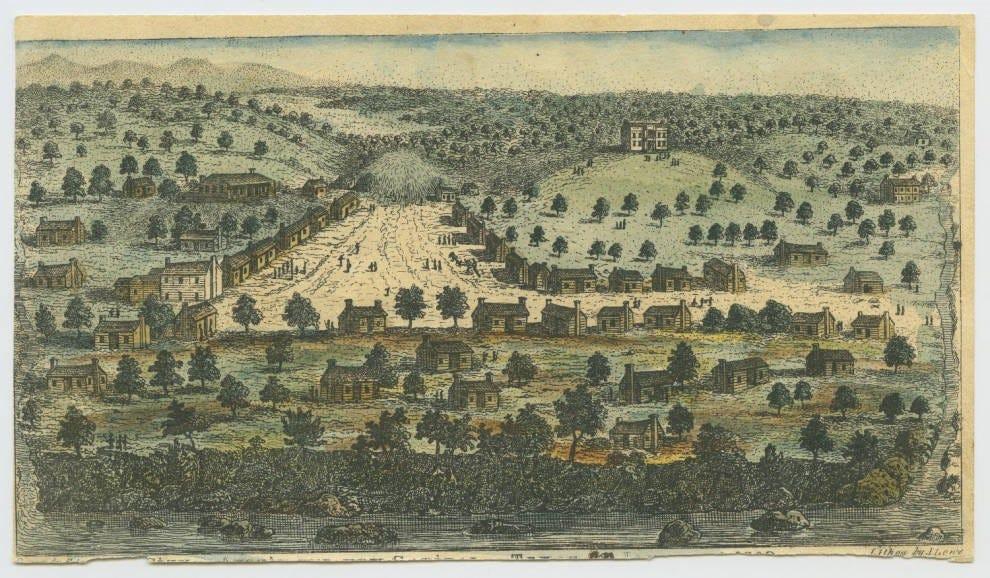
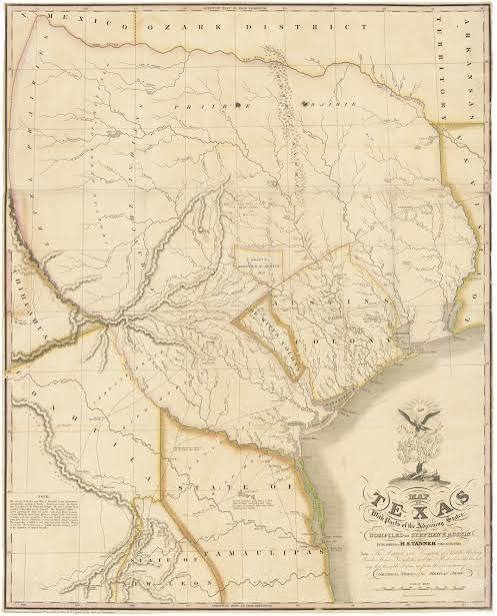
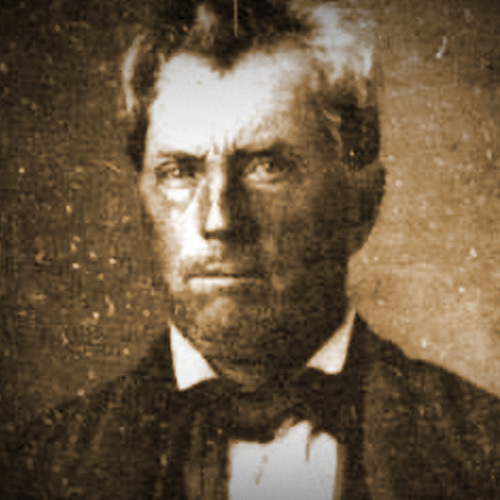
After President Mirabeau B. Lamar was inaugurated on December 10, 1838, the Republic of Texas began the search for a permanent location for its capital. On January 14, 1839, the Texas Congress passed an act establishing the new seat of government along the Colorado River at the small settlement of Waterloo. The act officially named the new capital city Austin, beginning the transformation of an undeveloped river landscape into the political center of the Republic.
Only a short distance away, beneath a grove of oak trees in what is now Republic Square, Judge Edwin Waller conducted Austin’s first public auction of city lots. The auction established the framework of Austin’s original city grid, creating the blocks and lots that would shape the future city. The proceeds from Waller’s auction helped finance construction of the new capital’s government buildings. The first day of sales reportedly included 306 lots and generated more than $182,000 in Texas currency, an extraordinary sum for the young Republic.
Among those original parcels was Block 44, located along Lavaca Street what was then known as Pine Street. Waller’s original 1839 plan used tree names for Austin’s east–west streets. In the late 1880s, the city renumbered the streets, and Pine Street became what is now West 5th Street. The site remained an undeveloped piece of the newly planned capital until it entered the historical record in 1849, when Lot 11 was associated with Joseph J. Addison and Lot 12 with Harvey Smith.
At the time, these parcels were little more than pieces of a growing city plan. There was no Fifth Street, no Lavaca Street address, no commercial building, and no indication that these two small lots would eventually become one of Austin’s most recognizable entertainment locations.
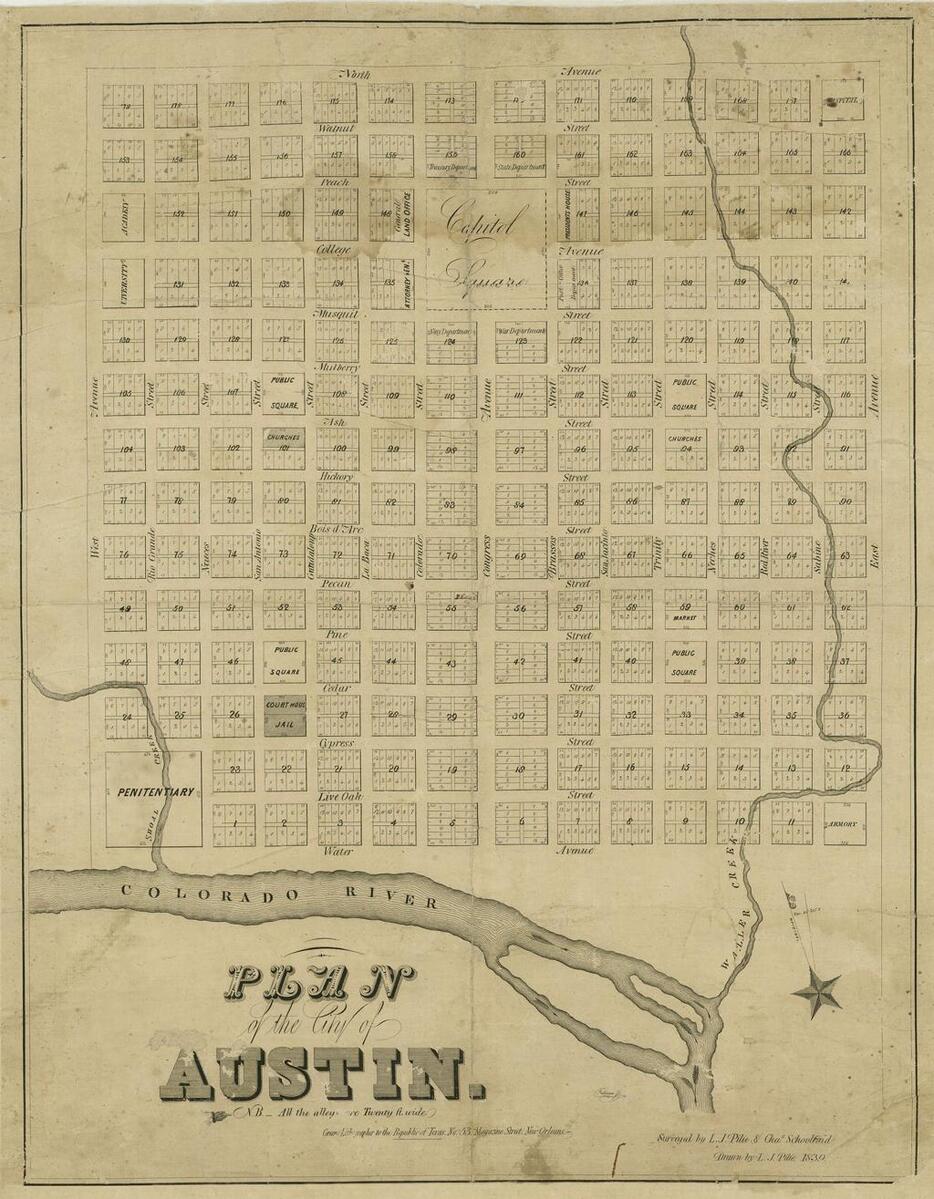
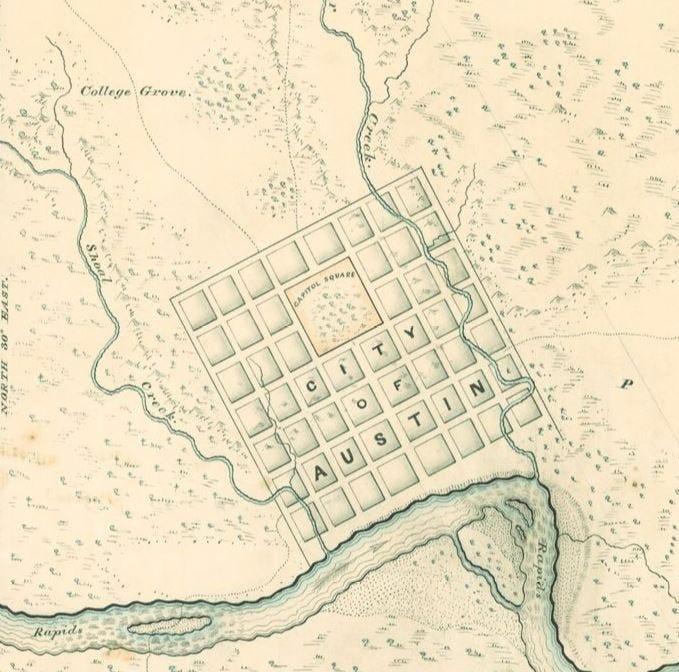
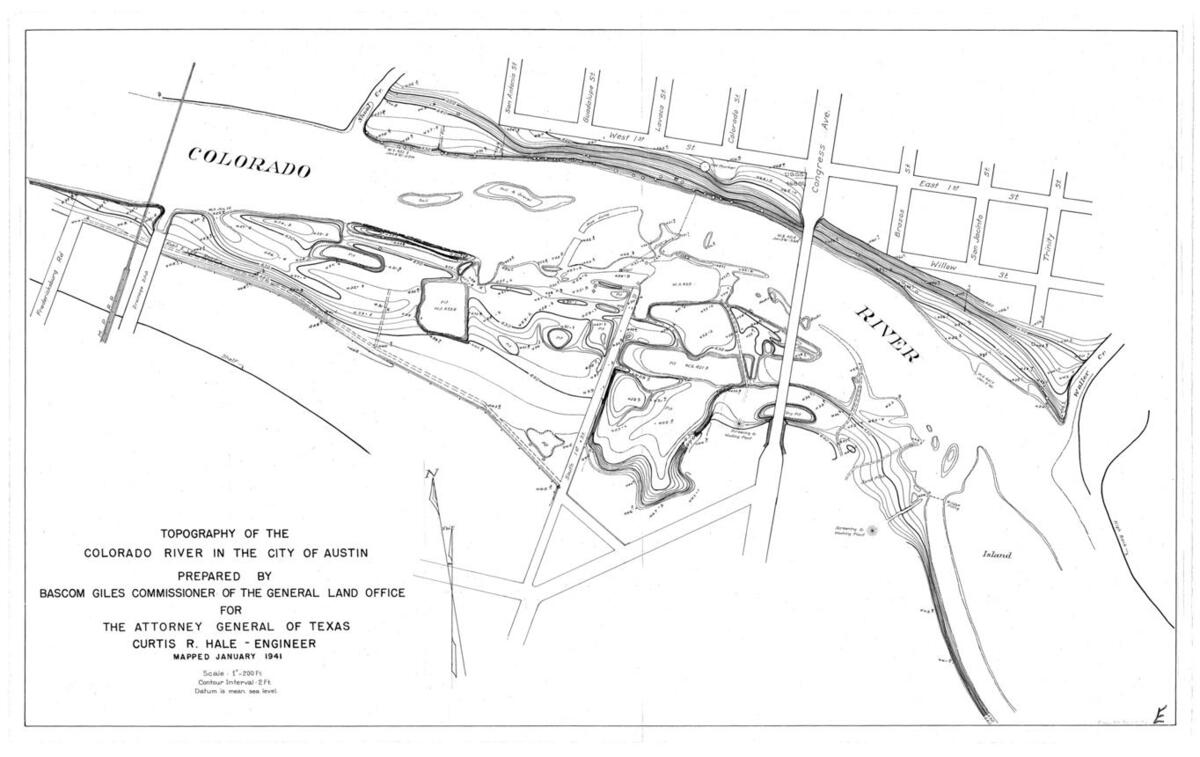
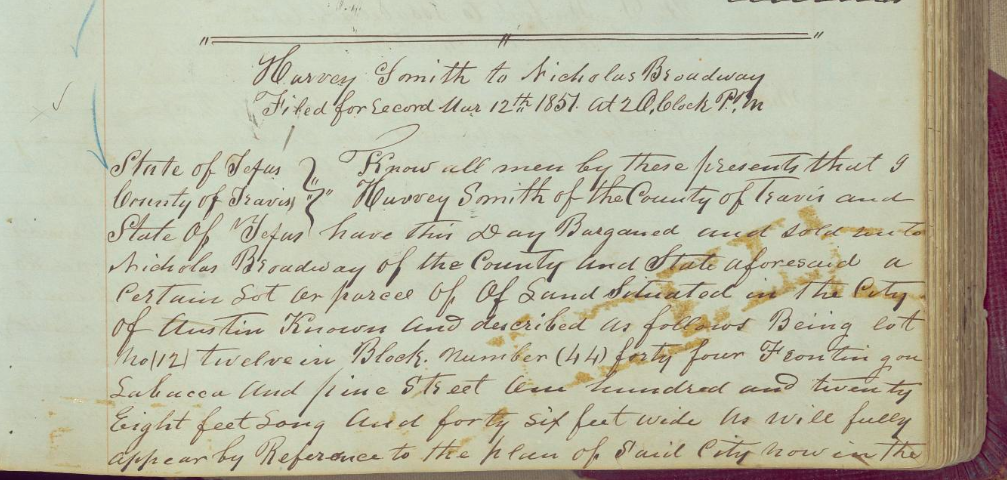
By the late 1910s, Block 44 had transformed from the early city lots shown on Austin’s original plan into a commercial block serving the needs of a growing city. As the Warehouse District developed, the area west of Congress Avenue became increasingly associated with automobile-related businesses, including garages, service stations, parts suppliers, and repair shops.
The corner of Fifth and Lavaca became one of these working automotive locations. Around 1918–1919, the buildings at 209 and 213 West Fifth Street were constructed as commercial properties designed for the automobile era.
At 213 West Fifth Street, the building was constructed as a single-story brick masonry commercial building with an open front designed for drive-in service from both Fifth and Lavaca Streets. Its first major use was the Austin Exide Battery Service Station (c. 1922–1929), operated by A.W. Whitten, which provided battery sales, recharging, starter repairs, generator repairs, and other automobile electrical services.
For more than five decades, 213 West Fifth continued to serve automotive businesses:
While the type of service changed over time, from batteries and electrical repair in the 1920s to tires, brakes, welding, truck rentals, and auto glass in the later decades, the building’s purpose remained remarkably consistent: supporting the vehicles that shaped twentieth-century Austin.
At 209 West Fifth Street, the building’s early history was similarly tied to automobiles. Its first documented occupant was A.P. Robinson’s Auto Garage (c. 1920). In the early 1920s, Lone Star Supply Company, operated by Patrick J. McDonald, occupied the building and supplied automobile accessories and related products. The building also housed Starr Motor Car Company in 1924. By 1930, Lone Star Supply Company became the primary occupant and remained at 209 West Fifth for nearly five decades. The company continued its automotive focus, providing parts, accessories, brake parts, and brake and clutch rebuilding services.
By the late 1970s, after more than sixty years of automobile-related uses, the corner of Fifth and Lavaca began to move into a new era. The buildings that had supported Austin’s transportation economy would soon take on a very different role in the city’s cultural history.
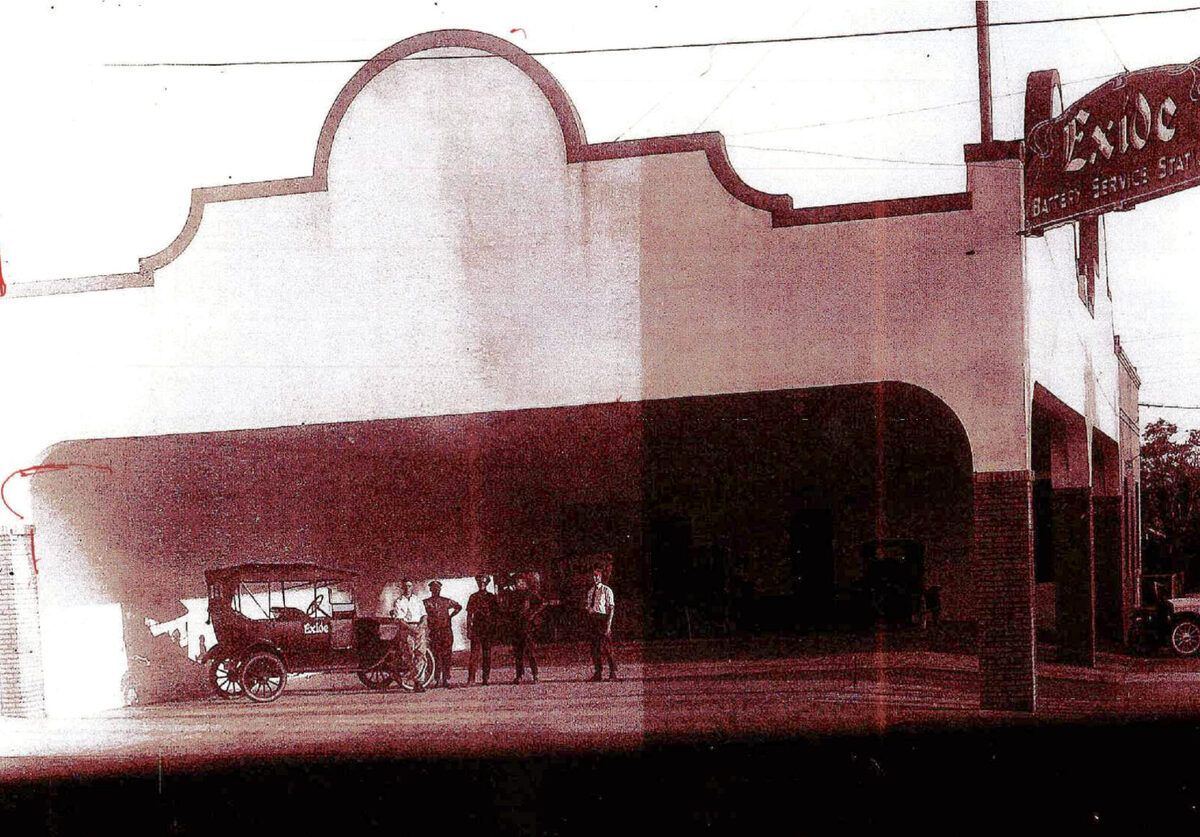
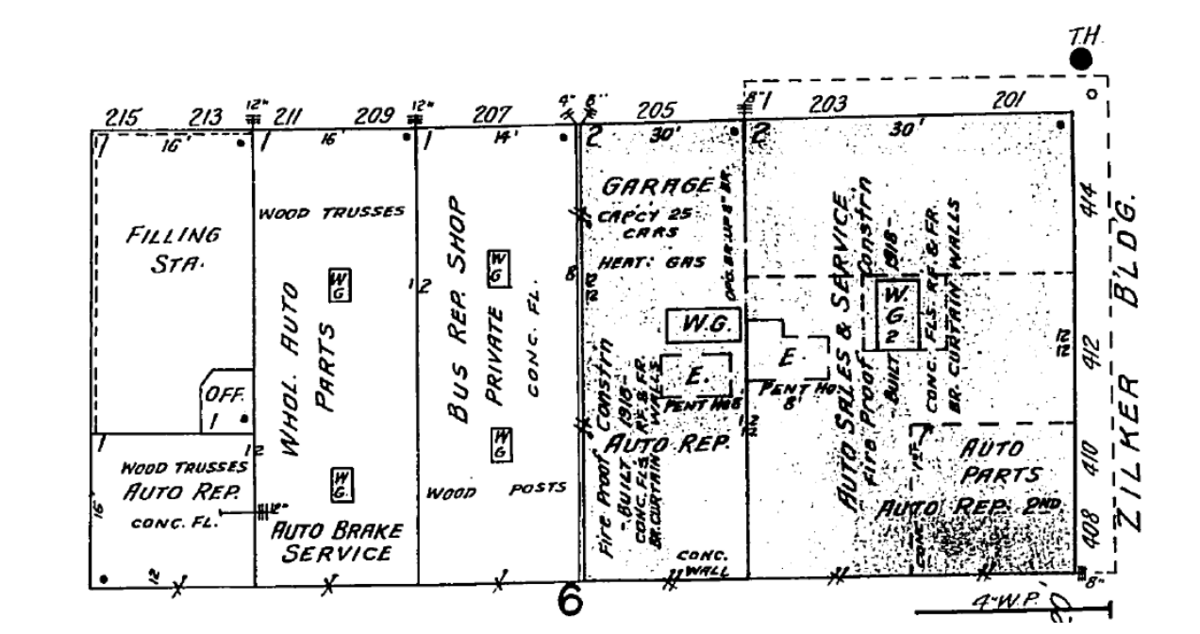
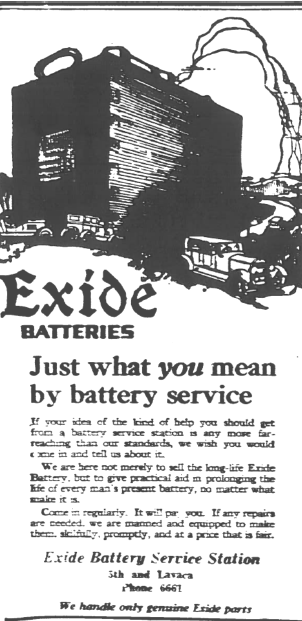
By the late 1970s, the long automotive chapter of Fifth and Lavaca was coming to a close. For more than half a century, 209 and 213 West Fifth Street had been defined by the businesses that supported Austin’s automobile economy. As the Warehouse District changed, however, the purpose of these buildings became less certain. The decline of traditional automotive uses in downtown Austin reflected a larger transformation occurring throughout the area as older commercial buildings faced new economic pressures and new opportunities.
At 213 West Fifth Street, the final decades of the twentieth century were marked by changing ownership and periods of vacancy. After the departure of longtime automotive-related occupants, the building was no longer defined by a single continuous use. It became part of a broader shift in downtown where older commercial structures were being reconsidered for new purposes.
The property briefly was associated with the investment firm Landmark Investments, but periods of vacancy followed as downtown uses continued to evolve. The building’s next major transformation would come in the 1990s, when it was remodeled for nightlife.
At 209 West Fifth Street, the transition away from automobiles followed a different path. After decades occupied by automotive businesses, the building entered a new commercial chapter when Ramon G. Galindo opened Ace Custom Tailors in 1981. The business remained at the property for many years, extending into the late 1990s.
Ace Custom Tailors represented a significant change in the identity of the building. The corner was no longer serving vehicles; it was serving people. The shift from automotive repair and supply to tailoring reflected the changing character of downtown Austin as the Warehouse District gradually moved toward a mix of professional, retail, and entertainment uses.
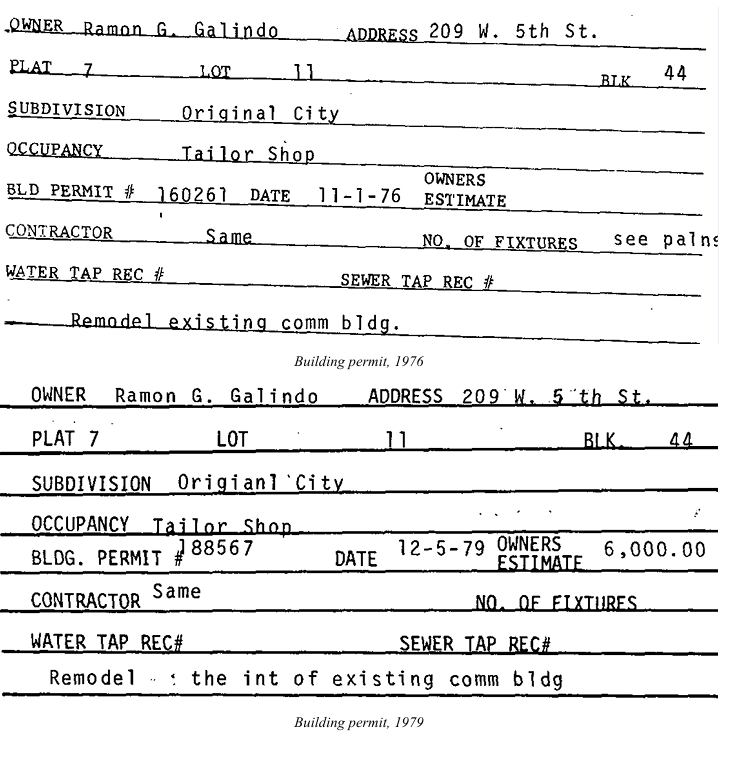
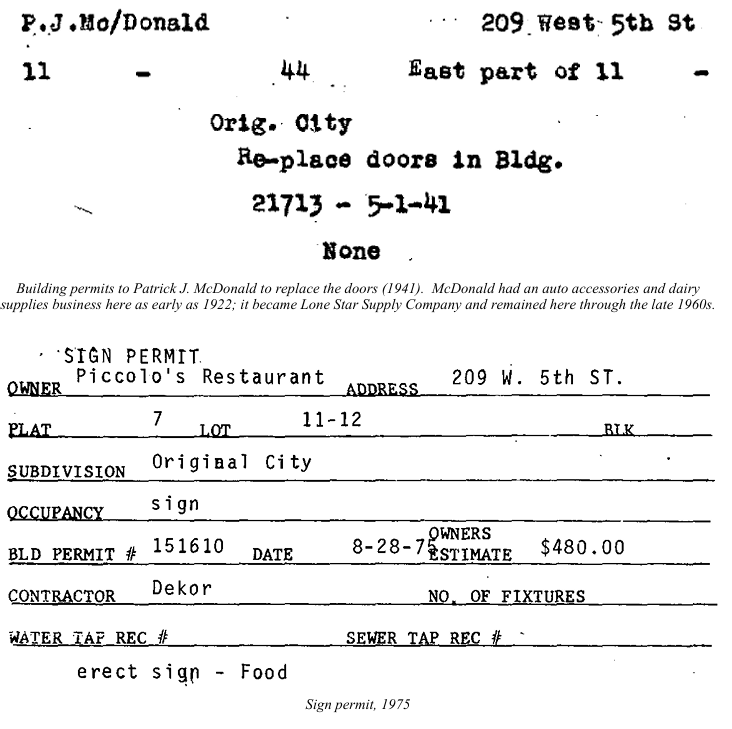
By the 1990s, the corner of Fifth and Lavaca had entered another period of transformation. Across the Warehouse District, older commercial buildings were being rediscovered as spaces for restaurants, bars, and entertainment. The same large, flexible spaces that had once supported automotive businesses could now accommodate a different kind of activity.
At 213 West Fifth Street, the first major step into this new era came in 1995, when the building was remodeled as Jellyroll’s Nightclub. The renovation enclosed the former open-front automotive service area and altered the building’s relationship with the street, converting a structure designed around vehicles into one designed around gathering people.
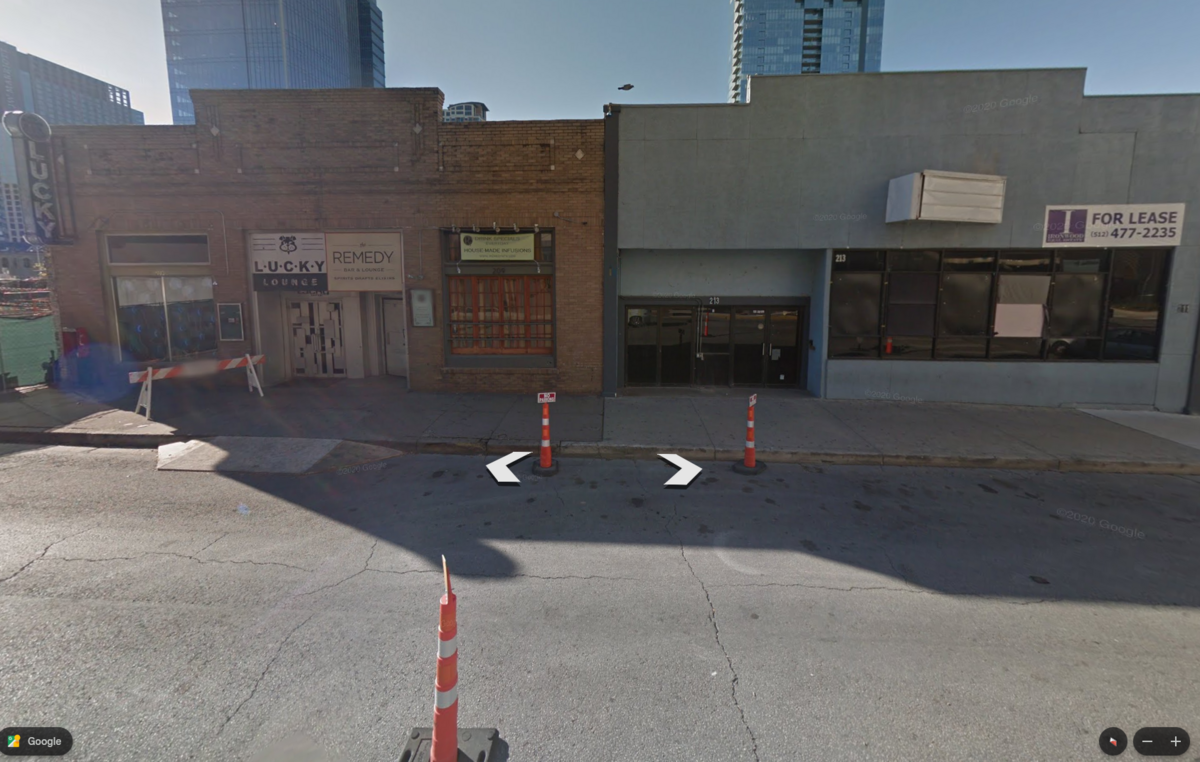
At 209 West Fifth Street, the transition followed a similar path. After Ramon Galindo’s Ace Custom Tailors remained at the property through the late 1990s, the building was remodeled for nightlife use. In the following years, the space became home to venues including Red Fez and Lucky Lounge, extending the building’s evolution from an early twentieth-century commercial property into the Warehouse District’s nightlife scene.
Together, 209 and 213 West Fifth Street reflected the broader transformation of downtown Austin. The corner moved away from its original role as part of the city’s automobile infrastructure and became part of the emerging nightlife district that was reshaping the Warehouse District.

When Antone’s Night Club moved to 213 West Fifth Street in 1997, the building took on a new identity that extended far beyond its walls.
Founded by Clifford Antone in 1975, Antone’s had already established itself as one of America’s premier blues venues. Before arriving at Fifth and Lavaca, the club had occupied three previous locations: Sixth Street, Anderson Lane, and Guadalupe Street. Each location contributed to the club’s history, but the Fifth Street era became its longest-running home.
The new location opened on June 18, 1997, with Jimmie Vaughan inaugurating the stage. The move returned Antone’s to downtown Austin and placed the club within a historic commercial building that had already undergone decades of transformation.
Although blues remained the foundation of Antone’s identity, the Fifth and Lavaca era broadened the club’s programming while maintaining its reputation for authenticity. The room welcomed established legends, emerging artists, and generations of musicians who continued the tradition Clifford Antone had created.
Artists associated with Antone’s legacy include:
Antone’s significance was not simply as a nightclub or music venue. Clifford Antone built a place where blues legends could continue performing, where younger musicians could learn directly from those artists, and where Austin’s local music community could develop alongside internationally recognized performers.
The club became one of the institutions that helped shape Austin’s reputation as the “Live Music Capital of the World.” In Austin’s cultural history, Antone’s occupied a role similar to the way landmark venues such as CBGB in New York or the Fillmore in San Francisco became associated with the development of their cities’ music scenes.
For sixteen years, 213 West Fifth Street was more than an address. It was a gathering place for musicians, fans, and generations of Austinites. A building originally designed to serve automobiles had become one of the most important stages in Austin music history.
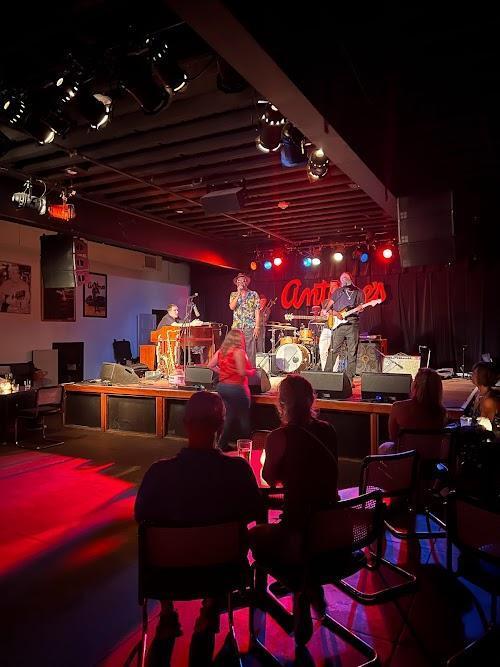
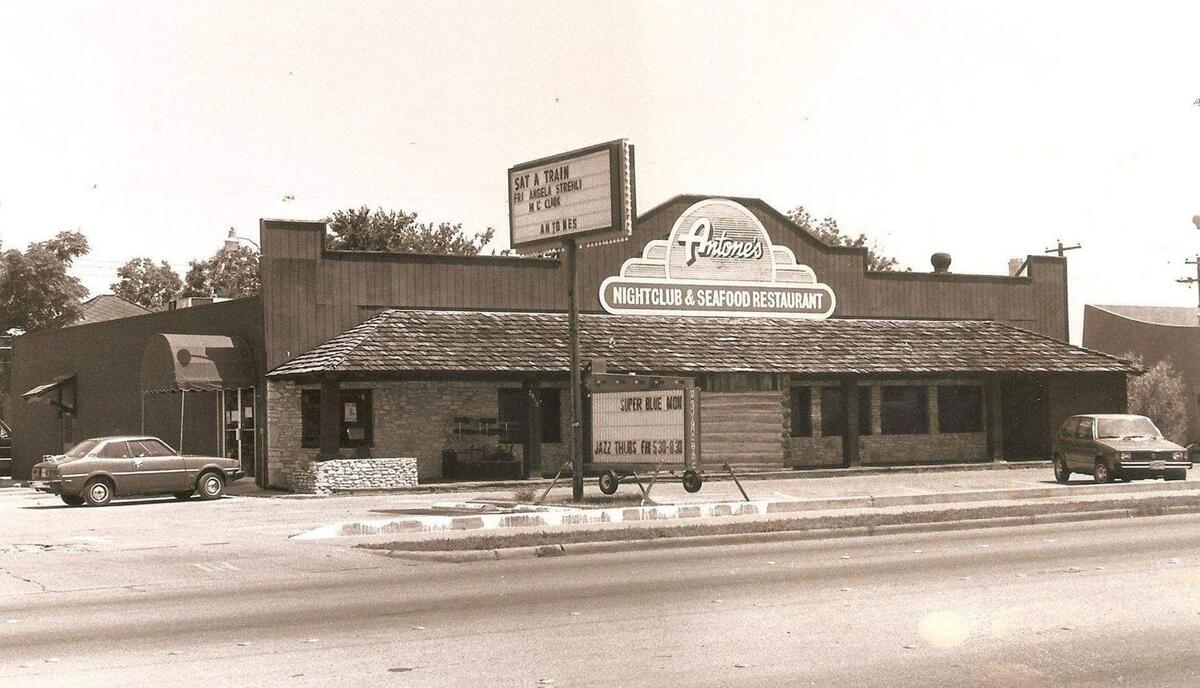
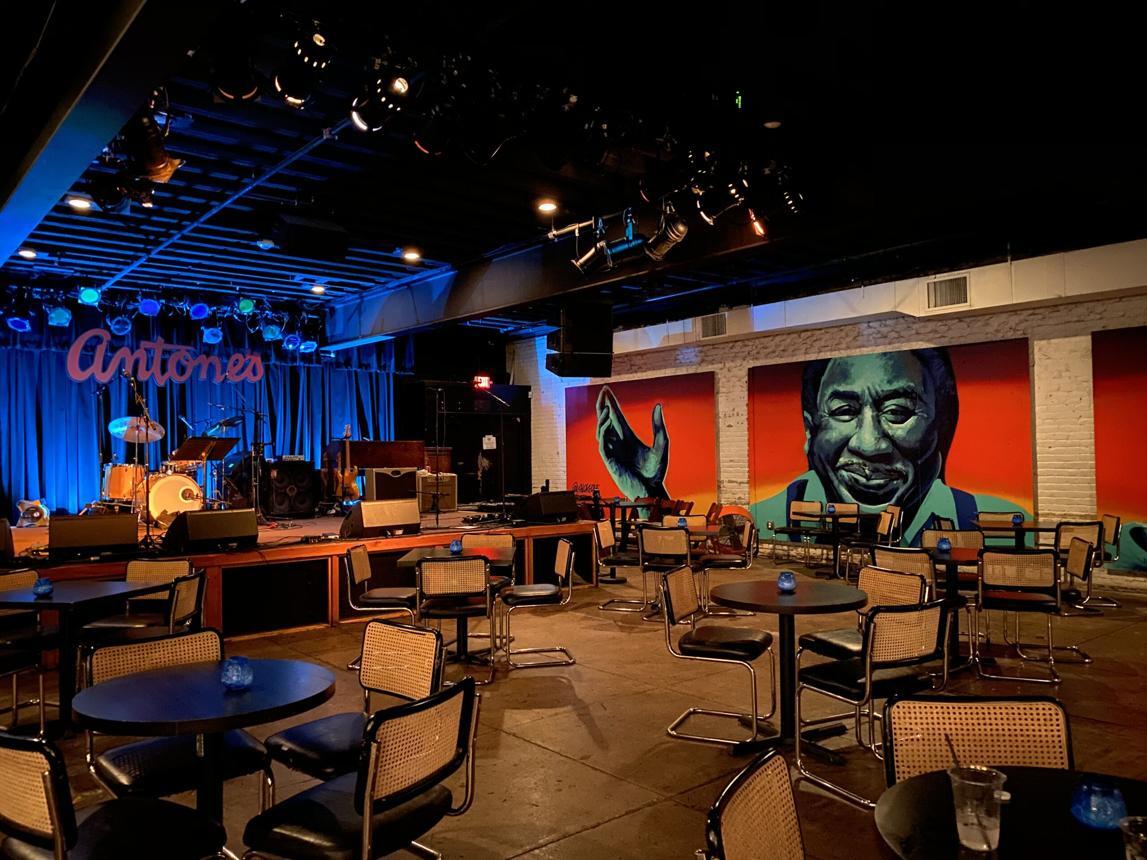
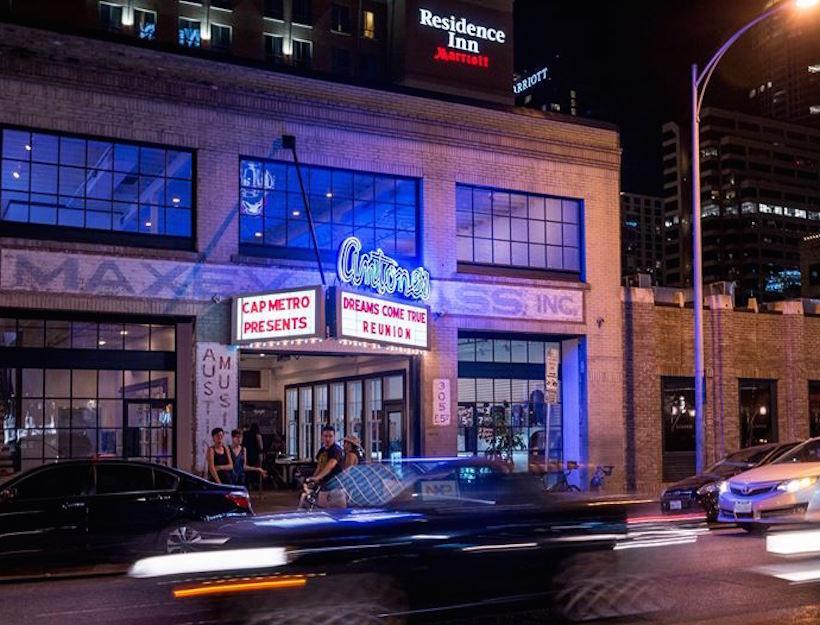
By 2013, the corner of Fifth and Lavaca had already lived several distinct lives. Following financial challenges after the recession, both buildings entered another period of change.
At 213 West Fifth Street, the departure of Antone’s marked the end of the building’s longest and most recognizable cultural chapter. However, the building did not simply disappear from downtown life. The former music venue continued to be used intermittently while plans developed for its next long-term purpose. The building remained an active part of the Warehouse District during a period when historic commercial spaces throughout downtown were being reconsidered and adapted.
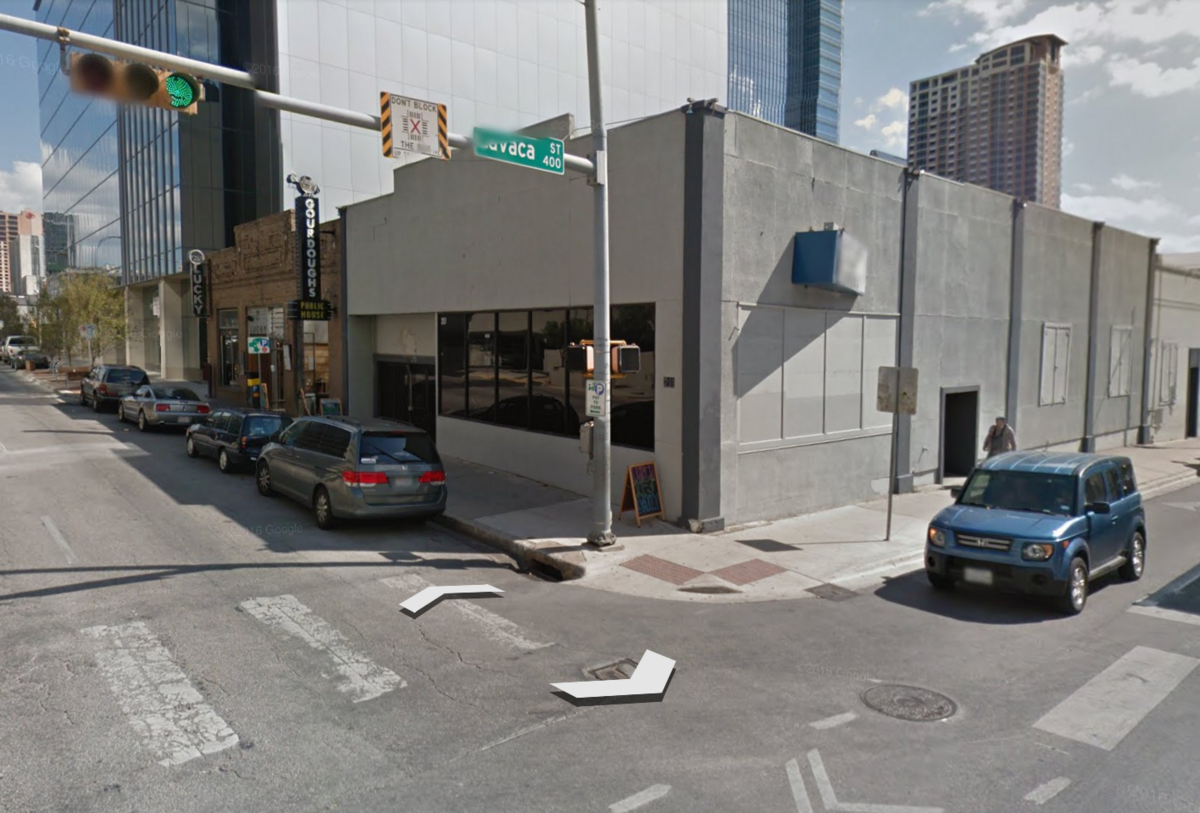
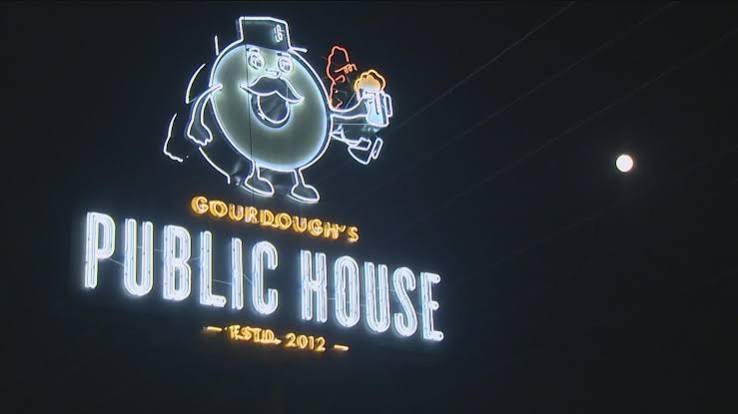
At 209 West Fifth Street, the evolution continued through a series of overlapping entertainment uses rather than a single replacement. During the 2010s, the property continued operating as a collection of entertainment spaces, with Lucky Lounge maintaining its presence while Remedy Bar & Lounge opened in 2013 in the former War Horse space. Together, these venues reflected the changing character of the Warehouse District, where older commercial buildings were being repurposed into bars and gathering places. In 2015, another transition occurred when Gourdough’s Public House opened at 209 West Fifth Street. The restaurant continued the building’s hospitality identity, shifting the space from a traditional bar environment toward a restaurant and entertainment concept. By 2017, both Lucky Lounge and Gourdough’s closed their doors and the building entered another transition period, never taking on a new major long-term identity.
Together, 209 and 213 West Fifth Street entered this period without a fixed identity, but with a long history of adaptation. The buildings had already served the automobile economy, retail and service businesses, nightlife, hospitality and live music.

After more than a century of separate but parallel histories, the corner entered a new phase. In 2017, portions of the historically distinct 209 and 213 West Fifth Street properties were brought together for the first time as part of a single entertainment concept.
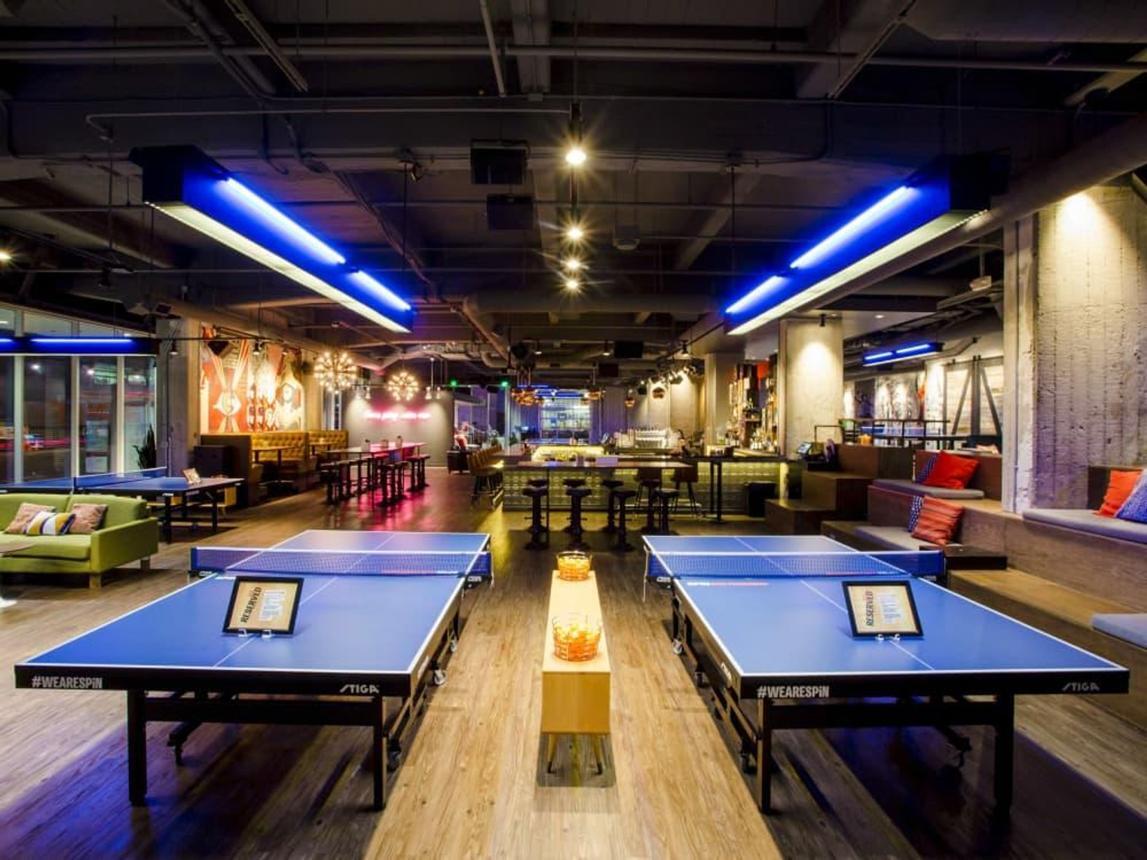
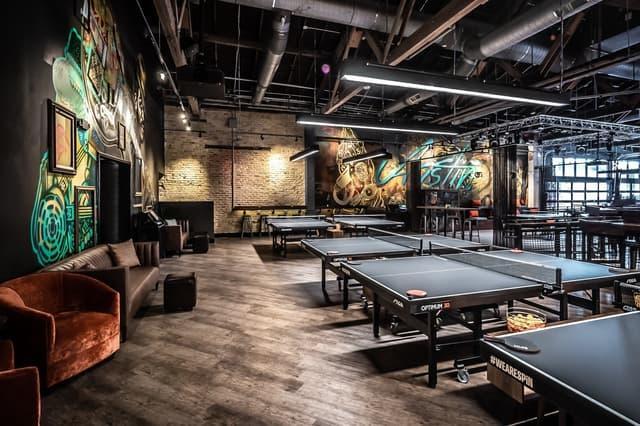
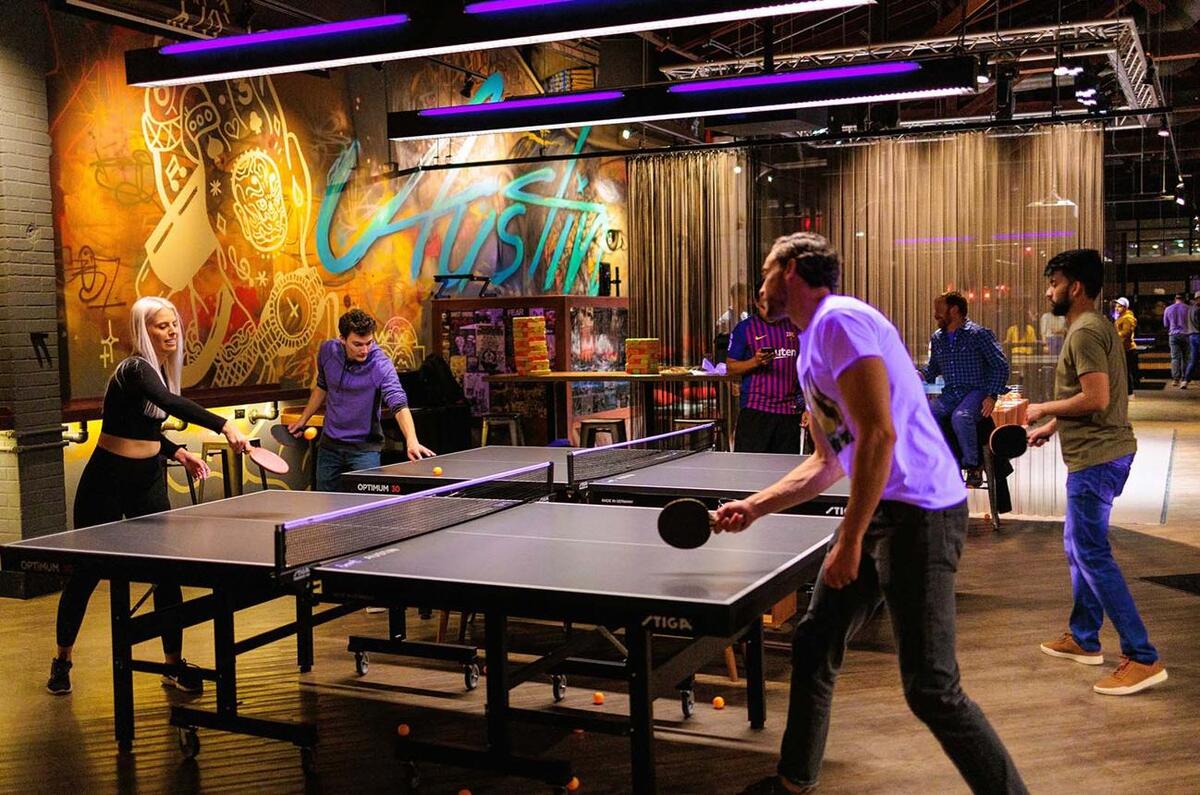
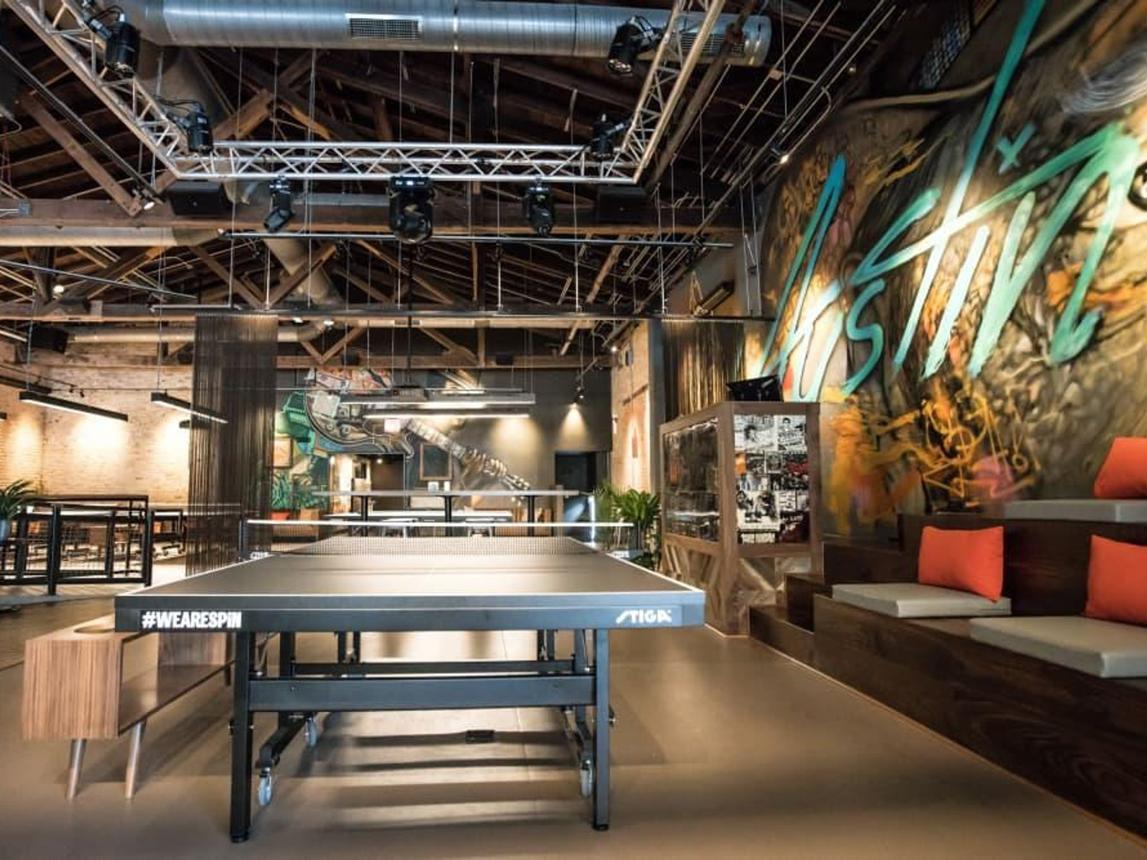
Spin, a sports and entertainment venue, undertook an extensive rehabilitation of the historic corner properties centered on the former Antone’s space at 213 West Fifth Street and incorporated a portion of the adjoining 209 West Fifth Street property into the new entertainment venue. The 209 West Fifth Street building was not entirely absorbed into the Spin project, and portions of the property remained separate and unoccupied.
The rehabilitation attempted to restore elements of the original 1919 character of the 213 West Fifth Street building, including the parapet roofline and windows that re-established some of the lines of the historic curved bay openings. The exterior later became an art installation by Samson Barboza featuring a guitar player, a nod to the site’s connection to Austin’s live music history.
While Spin brought a new identity to the corner, the transition was not uniform across both properties. Portions of 209 West Fifth Street continued through their own period of change, reflecting the continued complexity of adapting historic downtown commercial buildings.
SPIN closed its doors March 2020 due to the COVID-19 pandemic and reopened as SMASH ATX October 6, 2021 after receiving a $2.5 million pandemic relief grant. It was not a major architectural reset; but rather a concept change and rebranding of the existing ping-pong/bar venue. Smash kept much of the Spin layout (ping-pong tables, entertainment setup) but shifted the identity toward a restaurant/bar concept with comfort food, drinks, and events.
In February 2024, the venue closed permanently as redevelopment plans advanced. Local discussions reflected sadness not only for SMASH but also for the loss of another recognizable downtown gathering place.